
How many restrooms does a fair need in Westminster?
Start with attendance, not gut feeling. A single-day fair pulling 2,000 people across eight hours needs a materially different setup than a three-day event with overnight camping vendors. Standard porta potty rental units handle the bulk of general foot traffic, and each one holds a 60 to 70 gallon tank, enough for a steady crowd without a mid-event service call. For events, our porta potty placement guide walks through spacing near food courts, midways and grandstands, which is where lines actually form. ADA Standards section 213.2 requires that at least 5 percent of a clustered group be accessible units, with a minimum of one no matter how small the cluster, so a bank of ten standard units means at least one ADA accessible porta potty sitting right alongside them. If your fair runs a beer garden or a wine walk, add extra units near that zone specifically, since alcohol service changes bathroom frequency more than food does. We also price out deluxe flushable porta potty units for VIP tents or sponsor areas, where a fair board wants something nicer than the standard row. Westminster fairgrounds and church-lot events both fall under the same planning math: count your gate, count your hours, then build the restroom bank before the vendor map gets locked in. Check our how many porta potties do I need guide if you are still sizing a first-year event.
What does county fair restroom rental cost in Westminster?
Pricing depends on how many units, how many days and whether you need trailers with running water instead of standard units. A three-day fair typically rents standard units by the event rate rather than daily, since delivery and pickup already bracket the run. Here is what the bands look like:
| Unit type | Day | Week | Event |
|---|---|---|---|
| Standard unit | $100 - $350 | $130 - $500 | $200 - $800 |
| ADA unit | $200 - $400 | $240 - $400 | - |
| Restroom trailer | $175 - $2,500 | $1,650 - $2,500 | $2,499 - $3,899 |
A delivery fee separate from the unit rate usually runs $100 to $500 for a single drop, though multi-day events often negotiate that into the event quote. Larger fairs sometimes add a 4 stall restroom trailer or an 8 stall restroom trailer near the main stage, since trailers move more people through faster than a straight row of standard units. If your fair board wants full detail on trailer economics, our restroom trailer rental cost page breaks down what drives the range between a small two-stall unit and something built for headliner crowds. For fairs with a tighter budget, the porta potty rental cost page covers standard unit pricing city-wide, and monthly porta potty rental applies if the fairground runs vendor storage or offseason maintenance crews needing toilets outside the event window.
Do fair restrooms need to meet OSHA and ADA rules?
Yes, if fair staff and vendors count as employees on site, not just attendees passing through. OSHA 1926.51(c)(1) sets toilet ratios for construction-type crews, but fair setup and teardown crews building booths and stages fall under that same general sanitation logic: one facility for 20 workers or fewer, then additional seats as the crew grows past that. Separate from staff counts, ADA Standards section 403.5.1 requires a 36 inch clear route to each accessible unit, and section 404.2.3 sets the minimum door opening at 32 inches, both worth checking before booths get staked into the ground around your restroom bank. A 60 inch turning circle inside accessible units, per ADA Standards section 304.3.1, matters most for wheelchair users navigating solo. If your fair includes a food vendor row using paints or coatings for booth signage, OSHA 1926.51(f)(1) requires washing facilities for that specific work, separate from general fairgoer restrooms. Pair any handwash setup with our handwashing station rental page, since 29 CFR 1910.141(d)2) requires soap and towels, not sanitizer alone, at any washing station serving workers. For fairs pulling from Westminster and nearby draw areas, Stanton sits 4.0 miles north and Midway City is 1.3 miles southeast, both close enough that vendor crews commuting in daily should factor into your worker sanitation count, not just attendee counts. Our OSHA portable toilet requirements guide covers the worker-side math in full if your fair runs union labor for setup.
How far in advance should I book fair restrooms?
Book six to eight weeks out for a fair pulling more than a few thousand people, since trailer availability tightens fastest for weekend events. Standard units move faster and can sometimes be added closer to the date. Check our event restroom rental page for booking windows tied to specific attendance sizes.
Can I rent handwashing stations separately from restrooms?
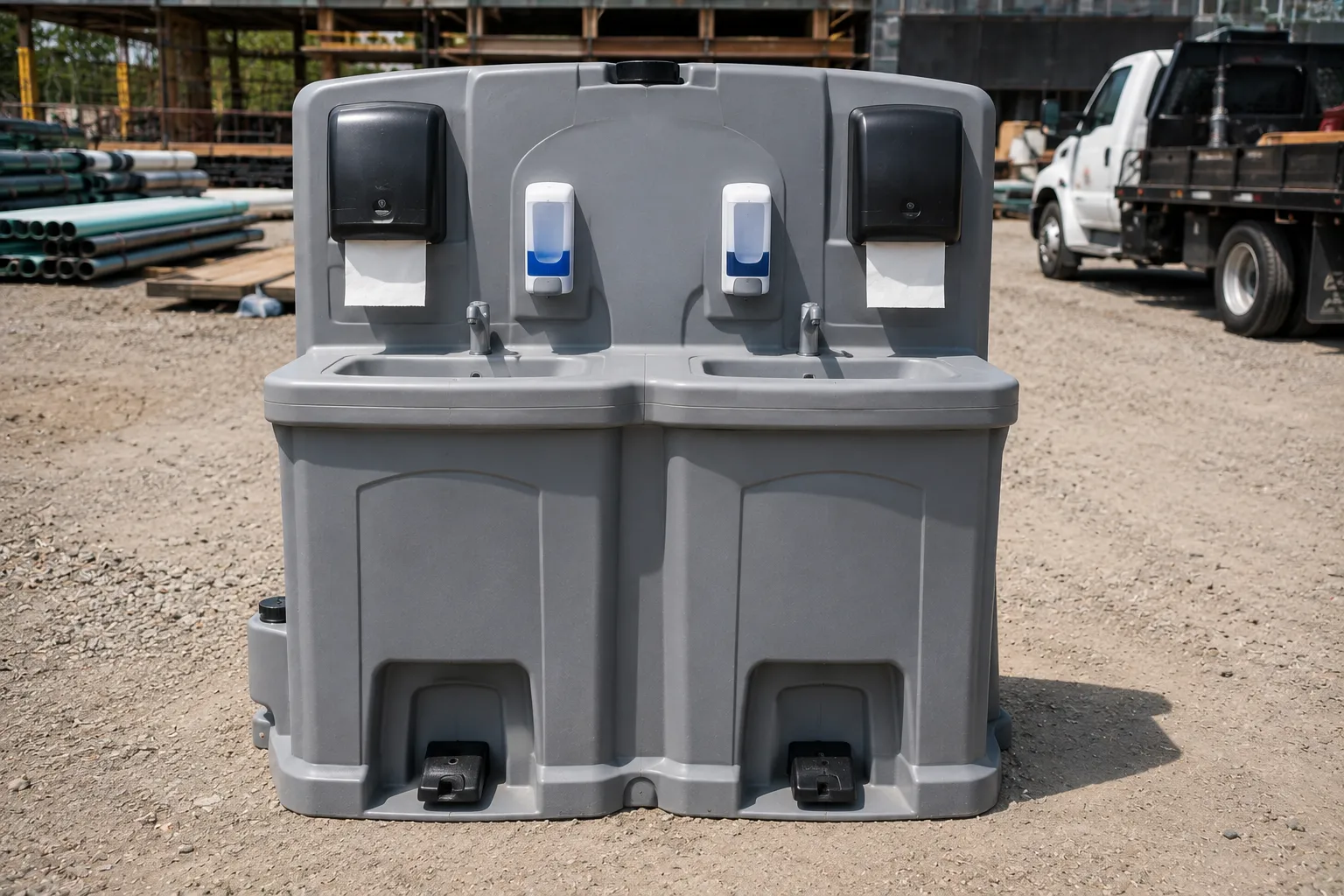
Yes. Handwashing stations rent as standalone units and pair well with food vendor rows. See portable sink rental for options with running water versus basin-style setups, and hand sanitizer station rental for a lighter-footprint alternative near smaller booths.
What is the difference between a standard unit and a restroom trailer?
A standard unit is a single-stall enclosure, about 44 by 48 inches on the ground and 92 inches tall, built for high turnover. A trailer offers multiple stalls, running water and interior lighting, better suited to VIP areas or headliner-adjacent crowds at a larger fair.
Do we need permits for restroom placement at a fair venue?
Placement in a public right of way or on fairground property needs confirming with the city before delivery trucks arrive. Check our porta potty permit requirements page, and coordinate delivery clearance with whoever manages the fairground lot directly.
Can North Star Porta Potty service units mid-event?
Yes, multi-day fairs typically get at least one service visit per day depending on headcount, following the baseline interval in ANSI/PSAI Z4.3 for high-use events. Ask about servicing schedules when you request a quote for your specific attendance and day count.
Next step
Get a delivery date
Tell us the address, the dates and the headcount. We size the order and confirm the route.